
Second Hand Plastic Injection Moulding Machine
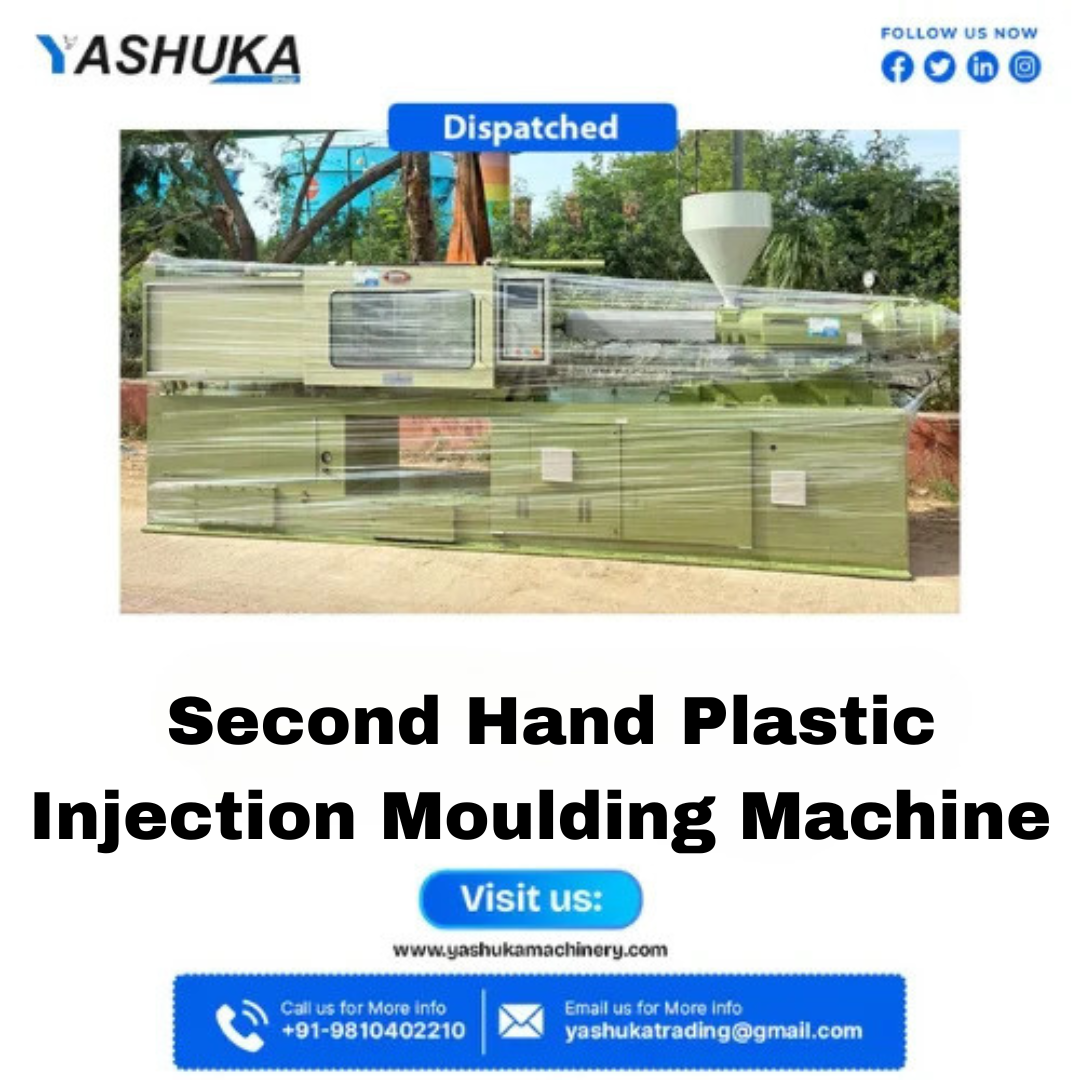
Second Hand Plastic Injection Moulding Machine
Best Second Hand Plastic Injection Moulding Machine - Full Guide Explained by Yashuka Machinery
Looking for a reliable and affordable second hand plastic injection moulding machine in India? Yashuka Machinery is your trusted partner. Since 2012, we have been supplying high-performance refurbished injection moulding machines and auxiliary equipment to manufacturers across India. Our machines go through a rigorous inspection, repair, and testing process before reaching your factory floor. We stock top Japanese and international brands including JSW, NISSEI, and HISHIYA — available across all tonnage ranges to suit every production requirement. Whether you manufacture automotive components, packaging products, household goods, or medical parts — we have the right machine for your business. Get premium machine quality at 40% to 70% lower cost than new machines, with full installation support, operator training, and performance warranty included.
Stop overpaying for new machines. Start producing smarter. Contact Yashuka Machinery today and get the best price on refurbished injection moulding machines in Delhi.
Why Buy a Second Hand Plastic Injection Moulding Machine?
The Indian plastics industry is one of the fastest-growing manufacturing sectors in the country. According to industry estimates, India produces over 16 million metric tonnes of plastic annually — and that number keeps climbing.
Yet, a huge challenge remains: the cost of production infrastructure.
Here is why thousands of Indian manufacturers are actively choosing second hand plastic injection moulding machines over new ones:
New machines come with a high upfront price, long delivery timelines, and often more automation than a small or mid-size unit actually needs. A well-refurbished second hand machine, on the other hand, gives you the same core functionality — hydraulic precision, consistent shot weight, reliable clamping force — at 40% to 70% lower cost.
The demand for used injection moulding machines in India is not born out of compromise. It is born out of smart business thinking.
When you buy from a trusted supplier like Yashuka Machinery, you are not buying a broken machine. You are buying a production-ready asset that has been inspected, repaired, tested, and certified for performance.
Benefits of Using Second Hand Plastic Injection Moulding Machine
Let us be specific here — not just generic bullet points, but real, measurable benefits that matter to a manufacturer:
- Lower Capital Expenditure: You spend significantly less upfront, freeing working capital for raw materials, labour, and operations. This directly improves your cash flow from day one.
- Faster ROI: Since your initial investment is lower, your machine pays for itself much faster. A new machine might take 3 to 5 years to recover. A refurbished one? Often 12 to 24 months.
- Proven Technology: Second hand machines — especially Japanese brands like HISHIYA, NISSEI, and JSW — have already proven themselves on the production floor. You are buying a machine with a track record, not a promise.
- Immediate Availability: New machines often have delivery delays of 3 to 6 months. Refurbished machines are available for immediate dispatch, which means you start producing faster.
- Lower Depreciation Risk: A new machine loses value the moment it enters your factory. A second hand machine has already gone through the steepest part of its depreciation curve — so your asset holds value better over time.
- Reduced Import Duties on Some Models: Depending on the origin and age of the machine, import duty structures can be more favourable for used equipment — giving you additional savings.
- Flexibility for Trial Production: If you are entering a new product category, starting with a refurbished machine reduces your financial risk significantly. You can test market demand before committing to a full-scale new machine.
Uses of Second Hand Plastic Injection Moulding Machine
Injection moulding machines are incredibly versatile. The second hand versions of these machines carry the same application range as new ones. Here is what manufacturers across India use them for:
- Manufacturing plastic caps, closures, and containers
- Producing automotive plastic components like dashboards, bumpers, and panels
- Making household goods such as buckets, chairs, mugs, and storage boxes
- Creating medical-grade plastic components including syringes, IV connectors, and lab equipment casings
- Producing packaging components like crates, pallets, and thin-walled containers
- Manufacturing electronic enclosures, switch boxes, and cable connectors
- Making toys, stationery items, and consumer goods
- Producing agricultural parts like irrigation fittings, nozzles, and sprinkler components
No matter what plastic product your business manufactures, there is a second hand injection moulding machine that fits your exact production requirement.
Advantages of Second Hand Plastic Injection Moulding Machine
Beyond basic benefits, here are the strategic advantages that experienced manufacturers already know:
- Access to Premium International Brands at Local Prices: Top-tier Japanese and European machines cost crores when new. In the second hand market, you can acquire the same brands for a fraction of that price.
- Better Build Quality in Older Machines: Many manufacturers and engineers will tell you that machines built in the 1990s and 2000s — especially Japanese ones — were built with heavier steel, tighter tolerances, and more durable mechanical components than some of today's budget new machines.
- Customisation Flexibility: With a second hand machine, it is easier and more affordable to get the machine retrofitted with modern controllers, energy-saving servo drives, or newer injection units — giving you the best of both worlds.
- Ideal for Job Work & Contract Manufacturing: If you handle job work for multiple clients, a second hand machine lets you maintain multiple tonnage ranges in your shop floor without burning your budget.
- Support the Circular Economy: Choosing a refurbished machine actively reduces industrial waste, lowers the demand for new raw material consumption in machine manufacturing, and supports sustainable business practices.
Types of Second Hand Plastic Injection Moulding Machine
Not all injection moulding machines are the same. Here is a breakdown of the main types available in the second hand market:
1. Horizontal Injection Moulding Machine This is the most common type found in Indian factories. The injection unit and clamping unit are aligned horizontally. It is ideal for general-purpose moulding of consumer goods, automotive parts, and household items. Available in a wide tonnage range — from 50 tonnes to 3,000 tonnes.
2. Vertical Injection Moulding Machine The clamping unit is vertical. These machines are used specifically for insert moulding, where metal inserts need to be placed inside the mould before injection. Common in electrical component and automotive connector manufacturing.
3. Hydraulic Injection Moulding Machine The most widely available type in the second hand market. It uses a hydraulic system to generate clamping force. Robust, easy to maintain, and suitable for a wide variety of materials and applications.
4. Hybrid Injection Moulding Machine Combines hydraulic and electric systems. Offers better energy efficiency than pure hydraulic machines, with lower operating costs. Available in the second hand market primarily from Japanese suppliers.
5. All-Electric Injection Moulding Machine Fully servo-driven machines with no hydraulic system. Extremely energy efficient and precise. Available second hand from brands like Fanuc, JSW, and Nissei. Best suited for precision medical and electronic components.
6. Two-Shot / Multi-Component Injection Moulding Machine Used for moulding two different materials or colours in one cycle. Ideal for toothbrushes, automotive switches, and dual-colour consumer products.
7. Pet Preform Injection Moulding Machine Specifically designed for manufacturing PET preforms used in the beverage bottling industry. Available second hand from brands like Husky and Nissei ASB.
Key Industries Using Second Hand Plastic Injection Moulding Machine in India
India's manufacturing landscape is wide and diverse. Here are the industries that most actively source refurbished injection moulding machines:
Automotive Components Industry: India is one of the largest automobile manufacturers in the world. Auto-ancillary units actively source used injection moulding machines for producing bumpers, interior panels, clips, and under-hood components.
Packaging Industry: Caps, closures, containers, crates — the packaging sector runs large volumes on injection moulding machines. Second hand machines are the backbone of mid-size packaging units across Gujarat, Maharashtra, and Delhi NCR.
Consumer Goods & Household Products: Manufacturers of plastic furniture, storage solutions, and kitchenware routinely operate on refurbished machinery.
Medical Devices & Healthcare: Smaller medical device manufacturers source refurbished machines for producing syringe barrels, caps, and non-critical plastic medical parts.
Electrical & Electronics: Enclosures, circuit breaker housings, switch plates — the electrical sector relies heavily on injection moulding. Many units in this segment use high-precision Japanese second hand machines.
Agriculture Sector: Drip irrigation fitting manufacturers across Maharashtra and Gujarat run their production lines on second hand machines due to the high volume and price-sensitive nature of the business.
Toys & Stationery: Small and medium units in Delhi, Rajasthan, and Gujarat manufacture toys and stationery components on used injection moulding machines.
Why Second Hand Plastic Injection Moulding Machine is Important
India's MSME sector contributes over 30% of the country's GDP. The majority of plastic goods manufacturers in India fall under the MSME category. For these businesses, access to affordable production equipment is not just a convenience — it is a survival necessity.
Second hand plastic injection moulding machines democratise access to production technology. They allow a small unit in Rajkot, a startup in Noida, or a family business in Hyderabad to compete with larger players — because they can access the same machine quality without the same capital burden.
They also play a critical role in:
Helping businesses scale gradually — adding capacity without overextending finances. Enabling manufacturers to diversify product lines by operating multiple machine types. Supporting Make in India goals by keeping domestic production costs competitive. Reducing dependence on Chinese imports by empowering local producers with affordable machinery.
How does Second Hand Plastic Injection Moulding Machine Work?
Understanding how your machine works helps you operate it better and maintain it more effectively. Here is the working process explained simply:
Step 1 – Material Feeding Plastic granules or pellets are fed into the hopper at the top of the machine. The hopper feeds material into the barrel continuously.
Step 2 – Melting Inside the barrel, a rotating screw pushes the material forward while heater bands around the barrel melt it into a liquid state. The temperature is precisely controlled depending on the type of plastic material being processed.
Step 3 – Injection Once the required shot volume of molten plastic accumulates at the front of the screw, the screw acts as a plunger and injects the material into the closed mould at high pressure.
Step 4 – Cooling The molten plastic fills the mould cavity and begins to cool. Cooling water channels inside the mould help speed up solidification. This stage determines the cycle time significantly.
Step 5 – Mould Opening & Ejection Once the part has solidified, the clamping unit opens the mould and ejector pins push the finished part out of the mould.
Step 6 – Cycle Repetition The mould closes again and the cycle repeats. Modern machines run fully automated cycles, producing hundreds to thousands of parts per hour depending on the component size.
A well-maintained second hand machine follows this exact same process with the same precision as a new machine — provided it has been properly refurbished and calibrated.
Second Hand Plastic Injection Moulding Machine - Key Technical Specifications to Look For
When evaluating any second hand injection moulding machine, you must understand and verify these critical technical parameters:
Clamping Force (Tonnage): Measured in tonnes, this is the force the machine uses to keep the mould closed during injection. Higher the tonnage, larger and more complex the parts you can produce. Common ranges: 50T, 80T, 120T, 160T, 200T, 300T, 500T, 800T, and above.
Shot Weight: The maximum amount of plastic (in grams) the machine can inject in a single shot. Must match your product's weight and your mould's runner system requirements.
Injection Pressure: Measured in bar or kg/cm², this determines how effectively the machine fills complex mould geometries. Higher pressure is needed for thin-walled or intricate components.
Screw Diameter & L/D Ratio: The screw diameter affects plasticising capacity. The L/D (Length to Diameter) ratio affects how well the material melts and homogenises. Typical L/D ratio ranges from 18:1 to 24:1.
Injection Speed: How fast the screw injects material into the mould. Critical for thin-wall moulding where material must fill before it cools.
Plasticising Capacity: How much material (in kg/hour) the machine can melt and prepare for injection. Important for high-volume production.
Tie Bar Distance: The space between the four tie bars. Determines the maximum mould size that can be installed in the machine.
Platen Size: The size of the fixed and moving platens, which determines maximum mould footprint.
Daylight (Opening Stroke): The maximum distance the moving platen can travel. Must accommodate your mould height plus ejection stroke.
Dry Cycle Time: How fast the machine opens, closes, and ejects without actual moulding. Indicates mechanical condition and speed capability.
Controller Type: Older machines may have older PLC controllers. Check if the controller is still functional, if spare parts are available, and whether it can be upgraded.
Top Brands Offering Second Hand Plastic Injection Moulding Machines
HISHIYA Injection Moulding Machine
HISHIYA is a well-regarded Japanese manufacturer of hydraulic injection moulding machines. Their machines are known for:
Robust hydraulic systems built for continuous production, high-quality barrel and screw assemblies that maintain plasticising consistency, simple and reliable control systems that are easy to operate and service, and availability in a wide tonnage range suitable for small to large plastic components. HISHIYA machines available in the second hand market are popular among Indian manufacturers because of their proven durability and the ease of sourcing service support.
NESSEI Horizontal Plastic Injection Moulding Machine
NISSEI is one of Japan's premier injection moulding machine manufacturers. Their horizontal machines are highly sought after for:
Precision injection control that produces consistent parts batch after batch, advanced servo-hydraulic hybrid systems that reduce energy consumption, clean and reliable clamping mechanisms that minimise flash and dimensional variation, and compatibility with a wide range of engineering and commodity plastic materials.
NISSEI machines in the second hand market retain their performance characteristics well into their extended service life — a major reason why Indian buyers specifically seek them out.
JSW Horizontal Plastic Injection Moulding Machine
Japan Steel Works (JSW) manufactures some of the most respected injection moulding machines in the global market. JSW horizontal machines stand out for:
High-rigidity machine structure that ensures long-term accuracy and repeatability, sophisticated controllers with user-friendly interfaces that simplify production setup, superior energy efficiency especially in their hybrid and electric series, and availability across a wide tonnage spectrum from 30T to 3,000T.
JSW second hand machines are particularly popular in the automotive components and precision packaging sectors in India.
Benefits of Refurbished Plastic Injection Moulding Machines vs. New Machines Plastic Injection Moulding Machines
Let us put this comparison on the table directly:
Cost: A new machine costs 100% of its market price. A refurbished machine of equivalent specification costs 30% to 60% of that price. The savings are immediate and significant.
Availability: New machines often require 3 to 6 months for manufacturing and delivery. Refurbished machines are available for inspection and dispatch within days or weeks.
Technology Level: New entry-level machines often come with basic technology to keep costs down. A refurbished premium Japanese machine at the same price point offers superior build quality and engineering.
Depreciation: A new machine depreciates rapidly in the first 3 years. A second hand machine has already absorbed the bulk of its depreciation — protecting your investment better.
Running Cost: This is where new machines can have an edge — modern all-electric machines consume less power. However, refurbished hybrid and servo-hydraulic machines can be retrofitted with energy-saving components to narrow this gap.
Spare Parts: For established brands like JSW, NISSEI, and HISHIYA, spare parts are widely available in India. Yashuka Machinery also helps customers source genuine spare parts.
After-Sale Support: When you buy from Yashuka Machinery, you get after-sale support, installation assistance, and operator training — something you rarely get from an unorganised used machine dealer.
Warranty: Yashuka Machinery provides a performance warranty on refurbished machines — giving you confidence that new machine buyers often take for granted, but which no other second hand dealer in India typically offers.
Top Exporting Countries & Brands - Where to Buy Imported Plastic Injection Moulding Machine
The global second hand injection moulding machine market is dominated by a few key countries. Here is what you need to know:
- Japan: The number one source for high-quality used injection moulding machines. Japanese manufacturers replace their production equipment frequently, releasing well-maintained machines into the export market. Brands: JSW, NISSEI, FANUC, HISHIYA, TOSHIBA, MEIKI, SUMITOMO.
- Germany: German machines are known for precision engineering. Popular brands in the second hand market include ARBURG, ENGEL (Austrian but widely sourced via Germany), KRAUSS MAFFEI, and DEMAG.
- Taiwan: Taiwan offers a mid-tier option — good quality at reasonable prices. Brands include CHEN HSONG, VICTOR TAICHUNG, and MULTIPLAS.
- South Korea: Korean brands like WOOJIN and LG offer solid hydraulic machines at competitive prices in the second hand market.
- Italy: Italian machines like SANDRETTO and NEGRI BOSSI are available in the European used machinery market and are imported by select dealers in India.
- Yashuka Machinery sources machines primarily from Japan — because Japanese machines consistently offer the best combination of quality, durability, and value in the Indian refurbished market.
Key Factors to Check Before Buying Second Hand Machines
Do not buy any second hand injection moulding machine without verifying these points:
- Machine Age and Original Manufacturer: Know the year of manufacture and the original equipment manufacturer. A 15-year-old Japanese machine is often more reliable than a 5-year-old machine from an unknown origin.
- Total Running Hours: Like a vehicle's odometer, running hours indicate how much the machine has been used. Ask for the hour meter reading or maintenance logs if available.
- Physical Condition of the Barrel and Screw: Wear in the barrel and screw directly affects plasticising quality and output consistency. Have a qualified engineer measure internal wear before purchasing.
- Hydraulic System Condition: Check for leaks, pressure stability, pump condition, and the condition of hydraulic seals and hoses.
- Controller Functionality: Test every function of the controller — injection speed, pressure, temperature zones, mould open/close, ejection. A faulty controller can be expensive to repair or replace.
- Tie Bar Condition: Check for any bending or damage to the tie bars. Damaged tie bars affect clamping force distribution and mould alignment.
- Heater Bands and Temperature Controllers: Verify all temperature zones are functional and holding set temperatures accurately.
- Platen Parallelism: Use a dial indicator to measure platen parallelism. Uneven platens lead to flash and short shots.
- Trial Run: Always request a trial run under load — with a mould installed — before finalising the purchase. A 30-minute production trial tells you more than any inspection report.
Questions to Ask the Seller
Before committing to a purchase, ask these direct questions:
Why is this machine being sold?
Has the machine been involved in any accident or major structural repair?
What is the total running hour count?
Is the maintenance history available in written form?
Has the barrel and screw been replaced or is it original? What is the current condition of the hydraulic pump?
Are all spare parts for this model available in India?
Does the machine come with original manuals and electrical drawings?
What is the warranty period offered on this machine?
Can I do a trial production run before finalising the purchase?
A trustworthy seller — like Yashuka Machinery — will answer every one of these questions with full transparenc
Where to Buy Second Hand Plastic Injection Moulding Machine
Knowing where to source your machine is as important as knowing what to buy. Here are your options:
Reputed Refurbished Machinery Dealers: This is the safest and most reliable option. Dealers like Yashuka Machinery inspect, refurbish, test, and certify machines before sale. You get documentation, warranty, and after-sale support.
Direct Import from Japan: Possible but complex. You need to handle customs, GST, shipping, and port clearance — plus you buy the machine as-is without any Indian refurbishment or testing.
Industrial Auctions: Machines sold at factory closure auctions can be a source, but you buy without any guarantee or testing. High risk unless you have a qualified engineer to inspect on-site.
Online Marketplaces: Platforms like IndiaMART list used machines, but the quality and reliability of sellers varies enormously. Exercise extreme caution and always inspect in person before buying.
Direct from Factories Closing Down or Upgrading: Sometimes manufacturers selling old machines directly can offer good deals — but again, no refurbishment, no warranty.
For most manufacturers, especially those buying their first machine or expanding into a new product line, buying from a trusted dealer like Yashuka Machinery is the smartest decision — because you are not just buying a machine. You are buying reliability, expertise, and ongoing support.
Why Japanese Second Hand Plastic Injection Moulding Machines Are in High Demand
This question comes up constantly in our conversations with buyers. Here is the honest answer:
Japanese manufacturers are globally recognised for their obsession with precision manufacturing and quality. Their machines are engineered with tighter tolerances, heavier-duty components, and better long-term reliability than the majority of machines produced elsewhere.
In Japan, factories upgrade their production equipment regularly — not because their old machines are broken, but because they are committed to running the latest technology. This means the used machine market receives well-maintained, high-quality machines frequently.
Japanese machines also come with a cultural quality advantage — the concept of "Monozukuri" (the art of making things) means Japanese engineers build machines designed to last decades, not just years.
For Indian manufacturers, Japanese second hand machines offer the ideal combination of premium build quality, proven durability, wide spare parts availability, and cost efficiency — making them the clear first choice in the refurbished market.
Common Myths About Second Hand Plastic Injection Moulding Machine
Let us bust some dangerous myths that stop manufacturers from making smart buying decisions:
Myth 1: "Second hand machines are always faulty or worn out."
Reality: A properly refurbished machine from a trusted dealer like Yashuka Machinery is inspected, repaired, and tested to production standards. Many refurbished Japanese machines outperform brand-new budget machines.
Myth 2: "You cannot get spare parts for used machines."
Reality: For established brands like JSW, NISSEI, and HISHIYA, spare parts are actively available in India. Yashuka Machinery also provides spare parts support to its customers.
Myth 3: "Second hand machines consume more electricity."
Reality: Energy consumption depends on the hydraulic pump, motor condition, and control system — not the age of the machine. Many older hydraulic machines can be retrofitted with variable displacement pumps to reduce energy use significantly.
Myth 4: "Banks won't finance second hand machinery."
Reality: Several banks and NBFCs in India actively finance refurbished machinery purchases. With proper documentation and a certificate from a reputed dealer, financing is very much possible.
Myth 5: "You cannot produce precision parts on a second hand machine."
Reality: Precision depends on the machine's condition and calibration — not whether it is new or used. Well-maintained second hand machines produce parts with the same accuracy as new ones.
Common Risks & How to Avoid Them
Every purchase carries risk. Here is how to protect yourself:
Risk 1 – Buying Without Inspection Always inspect the machine in person or send a qualified engineer for a pre-purchase inspection. Never buy based on photos alone.
Risk 2 – Unknown Machine History Ask for documentation of maintenance history. If the seller cannot provide any records, treat that as a red flag.
Risk 3 – Buying from Unverified Dealers Buy only from dealers with a verifiable track record, customer references, and a physical address. Yashuka Machinery has been operating since 2012 with a transparent business record.
Risk 4 – Controller Compatibility Issues Ensure the controller is compatible with your production requirements and that trained technicians in your area can support the system.
Risk 5 – Hidden Structural Damage Ask specifically about any past accidents, tie bar replacements, or major structural repairs. Have a technical expert examine the machine frame and platen alignment.
Safety Tips for Operating a Second Hand Plastic Injection Moulding Machine
Safety is non-negotiable on any production floor. Follow these guidelines when operating a refurbished injection moulding machine:
Always ensure all safety guards and interlocks are functional before starting the machine. Never bypass the safety door interlock — it is there to prevent the mould from closing while an operator is in the mould area. Ensure all electrical panels are properly grounded. Inspect hydraulic hoses regularly for leaks, cracks, or wear — a hydraulic pressure burst is a serious safety hazard. Keep the area around the machine clear of clutter and unnecessary personnel during operation. Train all operators on emergency stop procedures before they run the machine. Wear appropriate PPE — heat-resistant gloves when handling the barrel area, safety glasses near the injection zone. Never reach into the mould area while the machine is in automatic mode. Regularly test all limit switches and safety sensors for correct functioning. Keep a fire extinguisher accessible near the machine at all times.
Maintenance Tips of Second Hand Plastic Injection Moulding Machine
Proper maintenance extends the life of your machine and protects your production quality. Here is what you should do:
Daily Maintenance: Check hydraulic oil level and top up if needed. Inspect all hydraulic hose connections for leaks. Verify temperature readings across all barrel zones. Lubricate guide rails and tie bars as per the manufacturer's schedule. Clean the hopper and material feed area.
Weekly Maintenance: Check hydraulic filter condition and replace if differential pressure is high. Inspect clamp unit components for wear or unusual noise. Verify ejector pin alignment and lubrication. Check all electrical connections in the control panel for looseness or corrosion.
Monthly Maintenance: Change hydraulic oil if overdue or if oil has darkened or smells burnt. Check barrel heater bands for proper wattage output. Calibrate injection pressure and speed settings against reference parameters. Inspect screw and barrel wear using appropriate measurement tools. Check platen parallelism and adjust if deviation is observed.
Annual Maintenance: Complete overhaul of the hydraulic pump and valve system. Full inspection and calibration of all control parameters. Barrel and screw wear measurement and replacement if below specification. Inspection and replacement of tie bar nuts and toggles where applicable.
Do's and Do not with Second Hand Plastic Injection Moulding Machine
Do's: Always warm up the machine before starting production. Follow the material-specific temperature profile for every resin type you process. Keep a production log recording cycle times, settings, and any anomalies. Use filtered and dry compressed air — moisture in the pneumatic system causes valve failure. Source original or OEM-equivalent spare parts to maintain machine performance. Train your operators regularly — a well-trained operator prevents most machine failures.
Don'ts: Never run the machine without hydraulic oil at the correct level — this destroys the pump. Never force the mould close manually if the machine signals a fault — investigate the fault first. Do not ignore unusual noises from the hydraulic pump, toggle, or injection unit. Never mix different grades of hydraulic oil. Do not skip scheduled maintenance — deferred maintenance turns small issues into expensive breakdowns. Never allow untrained personnel to operate the machine independently.
Pros and Cons Second Hand Plastic Injection Moulding Machine
Pros: Significantly lower purchase cost compared to new machines. Immediate availability — no long manufacturing lead times. Access to premium international brands at accessible price points. Proven performance track record. Lower depreciation risk from the date of purchase. Flexibility to retrofit with modern energy-saving components. Ideal for scaling production gradually without over-investing.
Cons: Higher initial maintenance attention required compared to a brand-new machine. Older controllers may lack modern automation features. Energy efficiency may be lower than latest all-electric machines unless retrofitted. Limited or no original manufacturer warranty on machine performance. Requires a knowledgeable buyer or trusted dealer to avoid poor purchase decisions.
The pros clearly outweigh the cons — especially when you buy from a reputed refurbished machinery specialist who has already addressed the key risk factors before putting the machine on sale.
Things to Check Before Buying an Second Hand Plastic Injection Moulding Machine
Consider this your practical pre-purchase checklist:
Confirm the brand, model, and year of manufacture. Verify the clamping force (tonnage) matches your production requirement. Check that the shot weight specification matches your product and mould design. Inspect the barrel and screw for wear — compare internal diameter against original specification. Test all temperature zones for stable and accurate control. Run the machine through a full dry cycle — observe speed, smoothness, and any unusual sounds. Perform a hydraulic pressure test and check for leaks across all connections. Test the safety doors, guards, and interlocks for correct functioning. Confirm availability of spare parts for the specific model in India. Ask for and review any available maintenance or service history documentation. Request a live production trial with an actual mould before finalising. Confirm the warranty terms and after-sale support policy from the supplier.
Why Indian Manufacturers Trust Second Hand Plastic Injection Moulding Machine
The trust that Indian manufacturers place in refurbished injection moulding machines has built up over decades of practical experience. Here is what drives that trust:
Affordability in a Price-Sensitive Market: India's manufacturing sector is deeply cost-conscious. A machine that delivers the same output at 40% to 60% of the cost of a new one makes fundamental business sense.
Proven Japanese Engineering: The Japanese brands that dominate the second hand market in India have earned their reputation honestly — through decades of reliable performance in Indian factory conditions.
Strong Dealer Network: Over the years, a network of trusted refurbished machinery dealers like Yashuka Machinery has developed in India — providing buyers with reliable sourcing, technical support, and after-sale service that did not exist 20 years ago.
Success Stories Across Industries: From automotive to packaging, from medical devices to consumer goods — manufacturers across India have built successful businesses using refurbished injection moulding machines. These success stories drive continued confidence in the segment.
Government Support for MSMEs: Schemes like MSME credit support and MUDRA loans have made financing of refurbished machinery more accessible — encouraging more manufacturers to invest in second hand equipment as a smart capital allocation strategy.
Frequently Asked Question Related To Second Hand Plastic Injection Moulding Machine
Q1. What is the price range of second hand plastic injection moulding machines in India?
Prices vary based on tonnage, brand, age, and condition. Generally, you can expect to pay between ₹3 lakh to ₹50 lakh or more depending on the specification. Japanese brand machines in the higher tonnage range command premium pricing even in the second hand market — because they are worth it.
Q2. Is it safe to buy a Japanese second hand injection moulding machine?
Absolutely — provided you buy from a trusted and experienced dealer like Yashuka Machinery who has inspected, tested, and refurbished the machine before sale.
Q3. What plastic materials can a second hand injection moulding machine process?
All standard thermoplastics — PP, HDPE, LDPE, ABS, PVC, Nylon, PC, POM, TPE, and more — can be processed on a properly maintained second hand machine.
Q4. Can I get financing for a second hand injection moulding machine?
Yes. Many banks, NBFCs, and equipment financing companies in India provide loans for refurbished machinery. Yashuka Machinery assists customers with the documentation required for machinery financing.
Q5. How long does a refurbished injection moulding machine last?
A properly refurbished machine from a reputed brand can easily last another 10 to 20 years with correct maintenance. Many of our customers are still running Japanese machines that are 20+ years old without major issues.
Q6. What is the difference between a refurbished machine and a second hand machine?
A second hand machine is simply a used machine sold as-is. A refurbished machine has gone through a structured process of inspection, repair, parts replacement, testing, and certification. Yashuka Machinery sells refurbished machines — not just second hand ones.
Q7. Do you provide installation and operator training?
Yes. Yashuka Machinery provides installation support and operator training as part of our after-sale service.
Q8. Can a second hand machine be customised for my specific production requirement?
Yes. Machines can be retrofitted with specific screw profiles, new controllers, energy-saving servo pumps, and custom tooling as needed. Yashuka Machinery can advise on what customisation is possible and cost-effective for your application.
Q9. How do I know if the tonnage of a machine is right for my mould?
The required clamping force depends on your part's projected area and the moulding pressure of your material. Our technical team at Yashuka Machinery can help you calculate the correct tonnage requirement for your specific mould and material combination.
Q10. What warranty do you provide on refurbished machines?
Yashuka Machinery provides a performance warranty on all refurbished machines sold. The specific warranty terms depend on the machine model and condition — our team will clearly communicate all warranty details at the time of sale.
Contact Yashuka Machinery For Second Hand Plastic Injection Moulding Machine At Best Price in Delhi
If you are serious about buying a high-quality second hand plastic injection moulding machine, Yashuka Machinery is the partner you need.
Since 2012, we have been India's trusted name in refurbished injection moulding machines and auxiliary equipment. We do not just sell machines — we match the right machine to your production requirement, ensure it is fully refurbished and tested, and support you through installation, commissioning, and beyond.
Here is what you get when you work with Yashuka Machinery:
A wide inventory of Japanese and international brand machines across all tonnage ranges. Full refurbishment including barrel inspection, hydraulic system service, controller testing, and mechanical calibration. Transparent pricing with no hidden costs. Performance warranty on every machine we sell. Installation support and operator training. Genuine spare parts sourcing assistance. Flexible payment and financing guidance.
Whether you are a startup looking for your first machine, an established manufacturer expanding production capacity, or a job work unit building a multi-machine facility — Yashuka Machinery has the right machine for you.
Get in touch with our team today. Tell us your production requirement — tonnage, material, part details — and we will recommend the best machine for your specific application.
Call us, visit our facility in Delhi, or reach out through our website to request a machine inspection or quotation. Our technical team is ready to assist you.
Yashuka Machinery — India's Trusted Name in Refurbished Injection Moulding Machines Since 2012.


