
Imported Injection Moulding Machines: Why Indian Manufacturers Choose Them
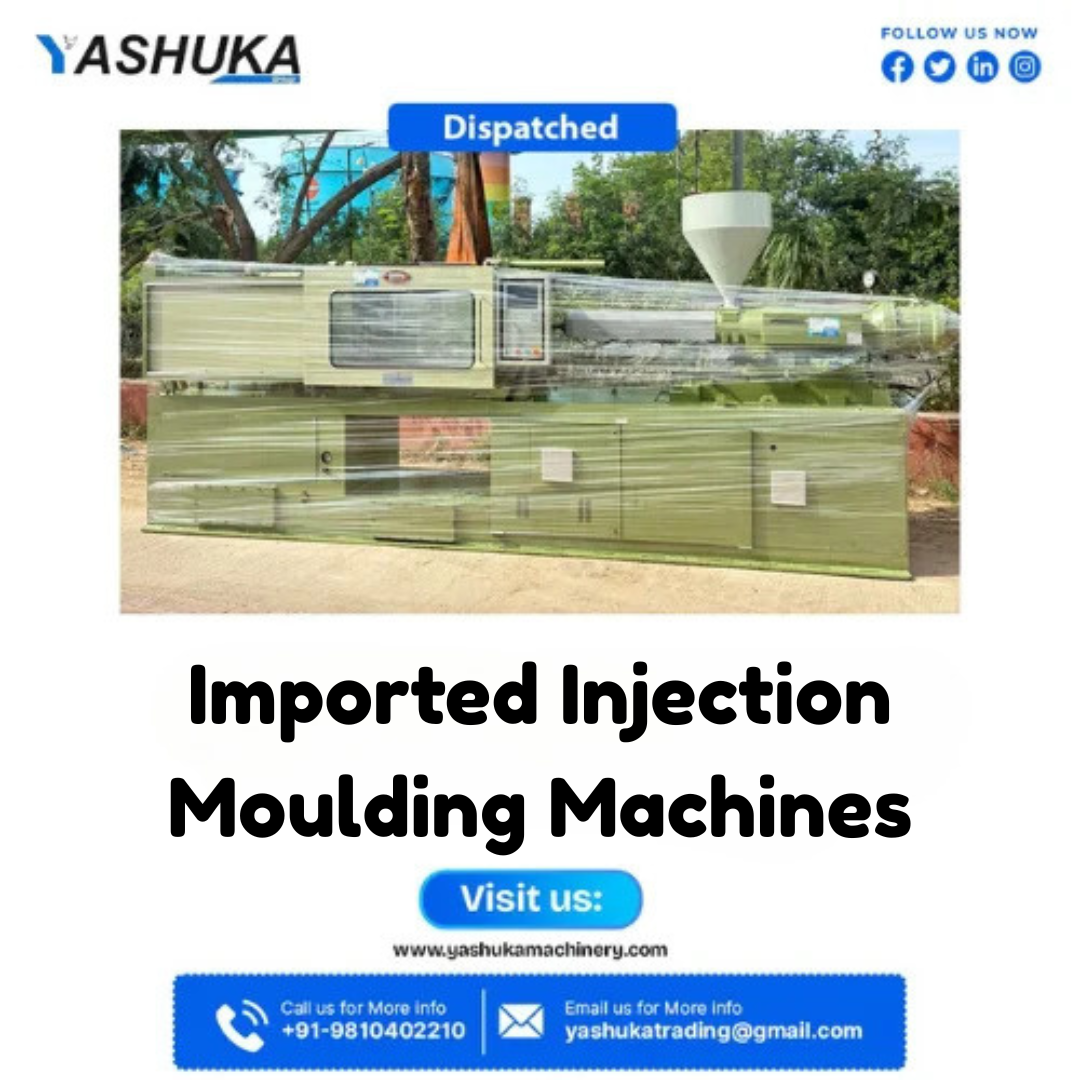
Imported Injection Moulding Machines: Why Indian Manufacturers Choose Them
Best Imported Plastic Injection Moulding Machines: What Indian Manufacturers Need to Know Before Buying It - Complete Detail Guide
Imported plastic injection moulding machines offer Indian manufacturers superior precision, energy efficiency, and long-term reliability compared to most domestic alternatives. Built in countries like Japan, Germany, and Taiwan, these machines deliver consistent output, lower per-part production costs, and advanced control systems that meet global quality standards. This guide covers everything a buyer needs to know — machine types, how they work, key technical specifications, top brands, maintenance tips, safety practices, and a clear comparison between new and refurbished units. It also busts common myths and highlights what to inspect before making a purchase. For manufacturers focused on quality, scalability, and export readiness, an imported machine is a smart long-term investment. And for those watching their budget, a well-refurbished imported machine from a trusted supplier delivers exceptional value.
Yashuka Machinery, Delhi — supplying high-performance refurbished imported injection moulding machines across India since 2012.
What Is an Imported Plastic Injection Moulding Machine?
An imported plastic injection moulding machine is a high-precision manufacturing system built outside India — typically in Japan, Germany, Taiwan, South Korea, or China — and brought into the Indian market for industrial use. These machines inject molten plastic under high pressure into a closed mould cavity. Once the plastic cools and solidifies, the mould opens and releases a perfectly shaped component. This process repeats hundreds or even thousands of times per hour depending on the machine type and cycle time. What separates an imported machine from a domestically assembled one is the manufacturing standard, component quality, energy efficiency, and repeatability of output. Countries like Japan and Germany have decades of precision engineering heritage. Their machines reflect that — in tighter tolerances, longer service life, and lower rejection rates on the production floor.
Benefits of Imported Injection Moulding Machines
1. Superior Precision and Repeatability Imported machines — especially from Japan and Germany — deliver consistent shot weights and dimensional accuracy part after part. This reduces your scrap rate and saves raw material costs over time.
2. Energy Efficiency Modern imported machines, particularly servo-hydraulic and all-electric models, consume significantly less power compared to older domestic hydraulic machines. For high-volume production, this translates to lakhs of rupees saved annually on electricity.
3. Longer Machine Life A well-maintained imported machine from a reputed brand lasts 20 to 30 years with proper servicing. The build quality of the hydraulic system, the clamping unit, and the screw-barrel assembly is simply more robust.
4. Advanced Control Systems Imported machines come with PLC-based controllers that offer real-time monitoring, data logging, and precise process control. You can fine-tune injection speed, pressure, temperature, and hold time with accuracy that older Indian machines cannot match.
5. Lower Per-Part Production Cost When you combine faster cycle times, lower energy consumption, fewer rejections, and longer machine life, the per-part cost drops considerably. This improves your margins and makes you more competitive.
6. Better Resale Value Brands like Fanuc, Toshiba, Sumitomo, and Arburg hold their resale value far better than unknown domestic machines. Even after 10 years, a well-maintained imported machine commands a strong price in the used machinery market.
Types of Imported Injection Moulding Machines
Hydraulic Injection Moulding Machines The most widely used type. Uses hydraulic pressure to drive the injection and clamping units. Robust, versatile, and ideal for thick-walled or large components. Brands like Mitsubishi, Engel, and Haitian offer excellent hydraulic models.
All-Electric Injection Moulding Machines Uses servo motors instead of hydraulic oil. Extremely energy-efficient — up to 60–70% lower power consumption. Preferred for medical, electronics, and clean-room applications. Fanuc and Sumitomo lead this category.
Servo-Hydraulic (Hybrid) Injection Moulding Machines Combines hydraulic power with servo motor control. Offers a balance of power and energy savings. Ideal for mid-range applications where all-electric is too expensive but pure hydraulic is too inefficient.
Two-Platen Injection Moulding Machines Designed for large moulds and heavy components. Offers a larger mould-mounting area with lower machine footprint. Common in automotive and white goods industries.
Multi-Component / Two-Shot Injection Moulding Machines Produces parts with two or more different materials or colours in a single cycle. Used in automotive interiors, consumer electronics, and medical devices.
Vertical Injection Moulding Machines Injects plastic downward into the mould. Ideal for insert moulding — where metal or other components are placed inside the mould before plastic is injected around them. Widely used in electrical and electronic component manufacturing.
Uses of Imported Injection Moulding Machines
Imported injection moulding machines produce an extraordinary range of products:
- Automotive parts: bumpers, dashboards, door panels, light housings
- Packaging: caps, closures, bottles, containers, crates
- Consumer goods: buckets, chairs, household items, toys
- Medical devices: syringes, IV connectors, surgical trays, diagnostic components
- Electronics: mobile phone housings, laptop casings, connectors
- Agriculture: drip irrigation fittings, sprinkler heads, storage tanks
- Construction: pipes, fittings, cable conduits, junction boxes
Key Industries Using Imported Injection Moulding Machines in India
Automotive Industry India's auto sector is one of the largest consumers of injection-moulded plastic parts. OEMs and Tier-1 suppliers demand the precision and repeatability that only imported machines provide. Manufacturers in Pune, Chennai, and Gurugram depend on German and Japanese machines to meet strict quality norms.
Packaging Industry Thin-wall packaging, closures, and food-grade containers require fast cycle times and tight dimensional control. Imported machines with hot runner systems and high-speed injection capabilities dominate this segment.
Medical and Pharmaceutical FDA and ISO-compliant component manufacturing demands zero contamination and part-to-part consistency. All-electric imported machines are the standard choice here.
Consumer Electronics Precision housings for mobiles, laptops, and appliances require fine surface finishes and tight tolerances. Japanese all-electric machines are the preferred choice.
Agriculture and Irrigation India's growing drip irrigation market needs high-volume, durable fittings. Robust hydraulic imported machines handle this demand efficiently.
Why Imported Plastic Injection Moulding Machine is Important
India's manufacturing sector is rapidly upgrading. With the government's Make in India push, PLI schemes, and increased export focus, manufacturers need machines that meet global quality standards. Imported machines bridge that gap.
They allow Indian manufacturers to:
- Compete with global players on quality
- Meet export quality certifications
- Reduce rejection rates and rework costs
- Scale production without proportionally scaling workforce
- Access technology that domestic manufacturers are still catching up to
An imported machine is not just a piece of equipment — it is a quality upgrade for your entire production operation.
How does Imported Plastic Moulding Machine Work? ( The Process )
Understanding the process helps you operate the machine better and troubleshoot faster.
Step 1 — Material Feeding Plastic granules or pellets are loaded into the hopper. A feed throat directs them into the barrel.
Step 2 — Plasticising (Melting) Inside the heated barrel, a rotating screw pushes the granules forward. The combined action of barrel heaters and frictional heat from the screw melts the plastic into a homogeneous, viscous melt.
Step 3 — Injection Once enough molten plastic has accumulated at the screw tip (called a shot), the screw moves forward like a plunger and injects the melt into the closed mould under high pressure — typically 500 to 2000 bar.
Step 4 — Packing and Holding After injection, additional pressure holds the melt in the mould to compensate for shrinkage as it cools. This phase determines dimensional accuracy and surface quality.
Step 5 — Cooling Cooling channels inside the mould carry water or coolant to solidify the plastic quickly. Cooling time is the longest part of the cycle — typically 60–70% of the total cycle time.
Step 6 — Mould Opening and Ejection Once the part is solid, the clamping unit opens the mould and ejector pins push the finished component out of the mould.
Step 7 — Mould Closing The mould closes again, and the cycle repeats.
A well-tuned imported machine can complete this entire cycle in as little as 3–5 seconds for thin-wall packaging parts.
Imported Plastic Injection Moulding Machine — Key Technical Specifications to Look For
Before you buy any imported machine, understand these critical specs:
Clamping Force (Tonnes) The force holding the mould shut during injection. Ranges from 20 tonnes to 5000+ tonnes. Match this to your mould's projected area and the injection pressure you need.
Shot Weight (Grams) Maximum amount of plastic injected per cycle. Must match your part weight with a 20–30% buffer.
Injection Pressure (Bar) Determines how well the melt fills complex mould geometries. Higher is better for thin-walled or complex parts.
Injection Speed (mm/s) Faster injection speed improves fill quality for thin-wall parts. Look for machines with programmable multi-stage injection profiles.
Plasticising Capacity (kg/hr) How much material the screw can melt per hour. Important for high-volume production.
Screw Diameter and L/D Ratio Larger diameter handles higher output. L/D ratio of 20:1 or higher ensures better mixing and melt homogeneity.
Tie Bar Spacing (mm) Determines the maximum mould size the machine can accept. Always verify that your largest mould fits within the tie bar distance.
Dry Cycle Time (seconds) Machine speed without any material — indicates mechanical speed of the machine.
Control System Look for machines with modern PLC controllers — Keba, Siemens, Bosch Rexroth, or Barber-Colman. These offer process repeatability, data storage, and remote diagnostics.
Energy Consumption (kW/hr) Critical for calculating your operating cost. Servo-hydraulic and all-electric machines are far more efficient than conventional hydraulic models.
Benefits of Importing vs. Buying Domestic
| Parameter | Imported Machine | Domestic Machine |
|---|---|---|
| Precision & Tolerance | Exceptionally tight | Moderate |
| Energy Efficiency | High (especially servo/electric) | Moderate to low |
| Machine Life | 20–30 years | 8–15 years |
| Spare Parts Availability | Requires planning but available | Readily available locally |
| Resale Value | Strong | Moderate |
| Technology Level | Advanced | Basic to moderate |
| Initial Cost | Higher (new) / Competitive (used) | Lower |
| After-Sales Support | Through authorised dealers / importers | Locally available |
For serious manufacturers, the imported machine's performance advantage almost always justifies the investment — especially when you factor in long-term operating costs.
Top Exporting Countries & Brands
Japan Fanuc, Sumitomo Demag, Toshiba Machine (now Shibaura Machine), Nissei, JSW, Toyo. Known for precision, reliability, and energy efficiency.
Germany Arburg, Engel (Austrian-German), Krauss-Maffei, Battenfeld. Known for engineering excellence, heavy-duty applications, and advanced automation.
Taiwan Chen Hsong, Fu Chun Shin (FCS), Victor Taichung. Offer excellent value for mid-range applications. Very popular in India's packaging and consumer goods sectors.
South Korea LG (LS Mtron), Woojin Plaimm. Good quality at competitive pricing.
China Haitian, Borch, Yizumi, HXF. Haitian is the world's largest injection moulding machine manufacturer by volume. Offers cost-competitive machines with improving quality standards.
Why Japan Injection Moulding Machines Are Always in Demand
Japan's injection moulding machines have a special place in Indian manufacturing for very specific reasons:
Kaizen-Built Quality Japanese machines are built on the principle of continuous improvement. Every component — from the hydraulic pump to the toggle linkage — is engineered for minimal wear and maximum longevity.
Energy Efficiency Japanese brands pioneered servo-hydraulic and all-electric technology. A Fanuc all-electric machine can save 50–70% on power compared to a conventional hydraulic machine.
Precision Engineering Japanese machines offer shot repeatability and dimensional accuracy that is simply unmatched. For medical components, electronics, and automotive parts — this precision is non-negotiable.
Low Maintenance Requirement Japanese machines are designed for minimal breakdowns. Their preventive maintenance schedules are straightforward, and the machines are built to run for decades without major overhauls.
Strong Resale Market In India's used machinery market, a 15-year-old Japanese machine still commands a better price than many newer domestic machines. That is a testament to their build quality and market trust.
Availability of Refurbished Units The Indian market has a healthy supply of refurbished Japanese injection moulding machines — particularly from Japanese factories that regularly upgrade their fleets. Companies like Yashuka Machinery specialise in sourcing, refurbishing, and supplying these machines to Indian buyers at highly competitive prices.
Common Myths About Imported Injection Moulding Machines
Myth 1: "Spare parts are impossible to find in India." Reality: Most major imported machine brands have authorised dealers and spare parts suppliers in India. Additionally, many components are cross-compatible. For refurbished machines purchased from reputed dealers, spare parts sourcing support is typically included.
Myth 2: "Imported machines are always too expensive for small manufacturers." Reality: Refurbished imported machines — especially from Japan and Taiwan — are available at prices that compete directly with new domestic machines. You get superior technology at comparable cost.
Myth 3: "Old imported machines break down more often." Reality: A well-maintained 15-year-old Japanese machine often outperforms a poorly maintained 3-year-old domestic machine. Maintenance history, not age alone, determines reliability.
Myth 4: "Operating imported machines requires highly skilled operators." Reality: Modern imported machines have intuitive touchscreen controllers with multilingual interfaces. With basic training, most operators can run these machines effectively.
Myth 5: "Customs and import duties make it not worth it." Reality: India has defined import duty structures for industrial machinery. When you calculate the total value over the machine's lifetime — lower energy cost, fewer rejections, longer life, higher resale — the import costs become a minor factor.
Common Challenges & How to Overcome Them
Challenge 1: Documentation and Import Compliance Importing machinery requires proper documentation — commercial invoice, packing list, bill of lading, certificate of origin, and technical specifications.
Solution: Work with an experienced machinery importer like Yashuka Machinery who handles all customs clearance and compliance on your behalf.
Challenge 2: Installation and Commissioning Setting up an imported machine requires proper foundation, electrical connections, cooling water supply, and hydraulic oil filling.
Solution: Ensure your supplier provides on-site installation support and operator training. Always prepare your factory infrastructure before the machine arrives.
Challenge 3: Language Barrier on Older Machine Manuals Some older Japanese or German machines have manuals in their native language.
Solution: Reputed dealers provide translated manuals or commissioning support from technically trained engineers who are familiar with these machines.
Challenge 4: Mould Compatibility Your existing moulds may have different platen dimensions or ejector patterns than the imported machine.
Solution: Share your existing mould dimensions with the supplier before purchasing. They can guide you toward machines with compatible platen and ejector specifications.
Challenge 5: Finding Trained Service Engineers Solution: Build a relationship with your machine supplier for ongoing AMC (Annual Maintenance Contract) support. Many experienced service engineers in India's industrial hubs specialise in imported brands.
Safety Tips for Operating a Imported Plastic Injection Moulding Machine— How to Operate Step-by-Step
Pre-Operation Safety Checks
- Inspect all safety guards and interlocks before starting. Never bypass safety gates.
- Check hydraulic oil level, coolant level, and lubrication points.
- Verify all electrical connections and grounding are intact.
- Ensure the emergency stop buttons are functional and accessible.
Startup Procedure
- Power on the machine and allow the controller to initialise.
- Set barrel temperatures according to your material's processing data sheet. Allow 20–30 minutes for temperatures to stabilise.
- Purge the barrel with a small amount of material before attaching the mould.
- Mount the mould carefully using properly rated bolts and clamps.
- Set clamping force, injection parameters, and cooling time in the controller.
- Run a few slow-speed test cycles before switching to production mode.
During Operation
- Never reach inside the mould area while the machine is running.
- Monitor shot weight and part dimensions periodically.
- Watch barrel temperature trends — sudden drops indicate a heater failure.
- Keep the area around the machine clean and free of plastic sprue and debris.
Shutdown Procedure
- Purge residual material from the barrel before shutdown.
- Open the mould and leave it slightly open to avoid sticking.
- Lower all temperatures gradually — do not cut power abruptly.
- Shut off cooling water after the barrel temperatures drop below 80°C.
- Log any abnormalities observed during the shift for maintenance review.
Maintenance Tips to Extend the Life of Imported Injection Moulding Machines
Daily Maintenance
- Check hydraulic oil level and temperature
- Inspect all safety guards and interlocks
- Lubricate toggle pins, tie bars, and ejector rods
- Clean the hopper and feed zone
- Check for oil or water leaks around hoses and fittings
Weekly Maintenance
- Check hydraulic filter condition and replace if necessary
- Inspect screw and barrel for signs of wear or corrosion
- Verify calibration of temperature sensors
- Check nozzle tip for wear or material build-up
- Inspect electrical panel for loose connections or heat discolouration
Monthly Maintenance
- Change hydraulic oil filter (or as per manufacturer schedule)
- Check alignment of platen, tie bars, and clamping unit
- Inspect toggle linkage pins and bushings for wear
- Test all machine safety functions and interlocks
- Flush and refill cooling water circuit if required
Annual Maintenance
- Full hydraulic oil change
- Screw and barrel wear measurement — replace if wear exceeds manufacturer tolerance
- Electrical panel inspection and cleaning
- Platen parallelism check and adjustment if necessary
- Full safety system audit
Pro Tip from Yashuka Machinery: Keep a machine logbook. Record every service, breakdown, and repair. This not only helps you plan maintenance but also significantly increases the machine's resale value.
Do's and Do not with Imported Injection Moulding Machines
Do's
- Do follow the manufacturer's recommended material processing parameters
- Do use the correct grade and viscosity of hydraulic oil specified for your machine
- Do train your operators on both operation and basic troubleshooting
- Do maintain a spare parts inventory for wear items — nozzle tips, screw tips, check rings, heater bands
- Do monitor energy consumption as an indicator of machine health
- Do run scheduled preventive maintenance without delaying it
- Do keep the machine area clean and well-lit
Don'ts
- Don't bypass or disable any safety guard or interlock — ever
- Don't ignore unusual sounds, vibrations, or temperature fluctuations
- Don't mix different grades of hydraulic oil
- Don't run the machine without checking the mould clamping force setting
- Don't allow untrained operators to change machine parameters without supervision
- Don't skip purging the barrel when changing material or colour
- Don't let the hopper run dry during production — air traps and material degradation follow
New vs Second-Hand Inported Injection Moulding Machine — Pros and Cons - Which One is Good
This is one of the most frequent questions manufacturers ask. Here is a clear breakdown:
New Imported Machine
Pros:
- Latest technology and energy efficiency
- Full manufacturer warranty
- Comes with complete documentation and manuals
- Eligible for government incentives and depreciation benefits
Cons:
- Significantly higher cost — often 3 to 5 times the price of a comparable refurbished unit
- Long lead time — especially for European brands (3–12 months)
- Higher depreciation in the first few years
Second-Hand / Refurbished Imported Machine
Pros:
- 40–60% lower cost compared to new
- Immediate availability — you can start production faster
- Proven technology with established spare parts availability
- Excellent value — especially for Japanese machines with known maintenance history
- Ideal for new businesses, capacity expansion, or budget-conscious manufacturers
Cons:
- Requires thorough inspection before purchase
- May need some refurbishment or part replacement
- Shorter remaining service life compared to new (though still many years if maintained)
- Warranty terms vary by supplier
Which One Should You Choose?
If you have the capital and need the very latest technology with warranty coverage, a new machine makes sense. But for most Indian manufacturers — especially those scaling up, entering new product lines, or working within a budget — a well-refurbished imported machine from a trusted supplier delivers 80–90% of the new machine's performance at a fraction of the cost.
Yashuka Machinery specialises in exactly this — sourcing and supplying thoroughly inspected, refurbished imported injection moulding machines that are ready to perform from day one.
Things to Check Before Buying an Imported Injection Moulding Machine
Never buy an imported machine without going through this checklist:
Machine History
- How many hours has the machine run?
- Is there a maintenance logbook available?
- What was the machine used for — what materials and products?
Physical Inspection
- Check tie bars for straightness and wear
- Inspect platen surfaces for cracks or deformation
- Check mould mounting holes for thread damage
- Inspect hydraulic hoses for cracks or leaks
- Check the screw and barrel for wear using standard gauges
- Inspect the toggle linkage and pins for wear
Electrical and Control System
- Power on the machine and check for fault codes
- Test all inputs and outputs in the controller
- Verify temperature controller accuracy
- Check all safety interlocks — mould safety, emergency stops, hydraulic pressure relief
Hydraulic System
- Check hydraulic oil condition — colour and contamination level
- Inspect pump and valve block for leaks
- Verify system pressure builds correctly
- Check for unusual noise from the hydraulic pump
Trial Run
- Always insist on a trial run under load before finalising the purchase
- Measure actual cycle time and shot weight consistency
- Check part dimensional accuracy if possible
Spare Parts Availability
- Confirm that spare parts for this brand and model are available in India
- Ask your supplier for a recommended spare parts list and their cost
Supplier Reputation
- Buy only from established dealers with verifiable track record
- Ask for references from past buyers
- Ensure the supplier provides after-sales support and service
Why Indian Manufacturers Trust Imported Injection Moulding Machines
India's manufacturing landscape has evolved significantly. The days of accepting "good enough" are over. Global supply chains, export demands, and quality-conscious domestic consumers now require precision that only well-engineered machines can deliver.
Here is why manufacturers across India continue to prefer imported machines:
Quality Certification Compliance Automotive OEMs, pharmaceutical companies, and FMCG brands mandate strict quality standards — ISO, TS16949, FDA compliance. Imported machines, with their precision and repeatability, make compliance achievable.
Lower Total Cost of Ownership When you calculate energy savings, lower scrap rates, fewer breakdowns, and longer service life, an imported machine's total cost over 10 years is often lower than a cheaper domestic machine that requires frequent repairs.
Technology Gap India's domestic machine manufacturers are improving, but they still lag behind Japanese and German counterparts in energy efficiency, control system sophistication, and build precision.
Established Trust Two generations of Indian manufacturers have operated Japanese and German machines. There is institutional knowledge, trained service engineers, and a spare parts ecosystem built around these brands in India's industrial hubs.
Frequently Asked Question Related To Imported Plastic Injection Moulding Machine
FAQ 1: What is an imported plastic injection moulding machine?
An imported plastic injection moulding machine is a high-precision manufacturing equipment built in countries like Japan, Germany, or Taiwan and supplied to Indian manufacturers. It injects molten plastic into a mould under pressure to produce consistent, high-quality plastic parts at scale.
FAQ 2: Why should I buy an imported injection moulding machine instead of a domestic one?
Imported injection moulding machines offer superior precision, longer machine life, better energy efficiency, and advanced control systems compared to most domestic alternatives. For manufacturers targeting quality-sensitive industries like automotive, medical, or packaging, imported machines deliver a significantly lower cost per part over time.
FAQ 3: Which country makes the best injection moulding machines?
Japan, Germany, and Taiwan are the top countries for injection moulding machines. Japanese brands like Fanuc, Sumitomo, and Toshiba are especially trusted in India for their precision engineering, energy efficiency, and long service life. German brands like Arburg and Krauss-Maffei lead in heavy-duty and high-precision applications.
FAQ 4: Is it better to buy a new or second-hand imported injection moulding machine?
For most Indian manufacturers, a well-refurbished second-hand imported machine offers 80–90% of a new machine's performance at 40–60% lower cost. If budget is a concern or you need fast delivery, a refurbished imported machine from a trusted supplier like Yashuka Machinery is the smarter investment.
FAQ 5: Are spare parts easily available for imported injection moulding machines in India?
Yes. Most major imported machine brands — including Fanuc, Engel, FCS, and Haitian — have authorised dealers and spare parts suppliers across India's industrial hubs. Established importers like Yashuka Machinery also provide spare parts sourcing support to ensure minimum machine downtime.
FAQ 6: What clamping force do I need for my injection moulding machine?
Clamping force depends on your mould's projected area and the injection pressure required. A general rule is 2 to 4 tonnes of clamping force per square centimetre of projected area. Always consult your mould designer or machine supplier to calculate the correct clamping force for your specific application.
FAQ 7: How much does an imported injection moulding machine cost in India?
The price of an imported injection moulding machine in India varies based on brand, clamping force, machine type, and condition. Refurbished imported machines typically range from ₹5 lakh to ₹80 lakh or more depending on tonnage and specification. Contact Yashuka Machinery for a transparent, no-obligation quote based on your exact requirement.
FAQ 8: How long does an imported injection moulding machine last?
A well-maintained imported injection moulding machine — particularly from Japanese or German brands — lasts 20 to 30 years. Machine life depends heavily on regular preventive maintenance, correct material usage, and operating within specified parameters. Proper upkeep directly extends service life and protects your investment.
FAQ 9: What industries use imported plastic injection moulding machines in India?
Imported injection moulding machines are widely used across automotive, packaging, medical devices, consumer electronics, agriculture, and construction industries in India. Any industry that requires high-volume, precision plastic component manufacturing benefits from imported machine technology.
FAQ 10: Where can I buy an imported injection moulding machine in Delhi?
Yashuka Machinery, based in Delhi, is one of India's most trusted suppliers of refurbished imported injection moulding machines since 2012. We stock machines from leading brands across Japan, Germany, and Taiwan — fully inspected, refurbished, and ready for immediate delivery with installation and after-sales support included.
Making Your Decision: Is an Imported Machine Right for You?
Ask yourself these questions:
1. What is my production volume requirement? High volumes demand fast, reliable machines. Imported machines deliver consistent uptime and cycle times that maximise your output.
2. What quality standard does my customer demand? If your customer is an OEM, exporter, or quality-certified manufacturer, an imported machine's precision is non-negotiable.
3. What is my budget? If a new imported machine stretches your budget too far, a refurbished imported machine from a reputed dealer like Yashuka Machinery gives you the same quality platform at a far lower entry cost.
4. What is my long-term plan? If you plan to scale production, build an export business, or supply to premium customers, invest in the right machine now. The right machine pays for itself many times over.
5. Do I have reliable after-sales support? This is where your choice of supplier matters as much as the machine itself. A trusted supplier with on-ground service support makes all the difference.
If you answered yes to even two of these questions, an imported injection moulding machine is the right choice for your business.
Contact Yashuka Machinery For Imported Machine At Best Price in Delhi
Since 2012, Yashuka Machinery has been India's trusted partner for high-performance refurbished injection moulding machines and auxiliary equipment. We source our machines from Japan, Germany, Taiwan, and other leading manufacturing countries — inspect them rigorously, refurbish them to performance standards, and deliver them ready-to-run to manufacturers across India.
Why manufacturers across India choose Yashuka Machinery:
- Over a decade of experience in sourcing and supplying imported injection moulding machines
- Machines thoroughly inspected, tested, and refurbished before delivery
- Wide range of clamping forces — from 50 tonnes to 1500+ tonnes
- All major brands available — Fanuc, Sumitomo, Toshiba, Engel, Arburg, FCS, Haitian, and more
- Transparent pricing with no hidden charges
- On-site installation, commissioning, and operator training support
- After-sales service and spare parts assistance
- Flexible payment options available
Whether you need a single machine for a new product line or a full fleet upgrade, Yashuka Machinery has the right imported injection moulding machine for your requirement — at the best price in Delhi.
📞 Call us today to discuss your requirement and get a free consultation. 📍 Visit our facility in Delhi to inspect machines firsthand. ✉️ Send us your enquiry and receive a detailed quote within 24 hours.
Yashuka Machinery — Precision Machines. Trusted Partner. Since 2012.


